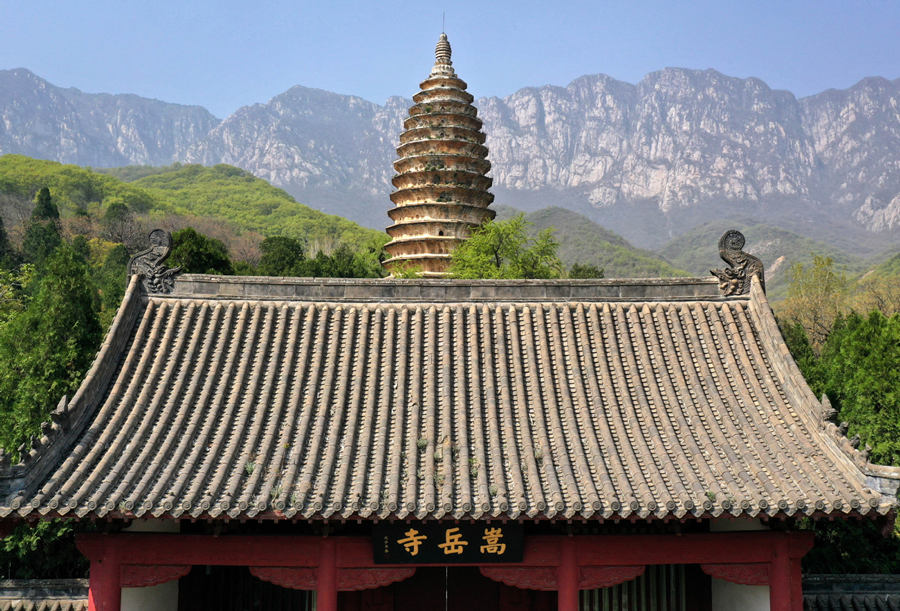
Songyue Temple in Dengfeng, Henan
Introduction
Songyue Temple, also known as Big Pagoda Temple, located in Dengfeng, Henan province, is a significant cultural and historical site in China. Nestled at the foot of the Songshan Mountain, known as the central sacred mountain of China, the temple is part of the historic monuments of Dengfeng in "The Center of Heaven and Earth". The Songyue Temple, renowned for its ancient architectural significance, is especially noted for its 1,500-year-old pagoda, which is among the oldest religious edifices in China.
Songyue Temple was established against the backdrop of Dengfeng's historical significance as a center for various dynasties and religious cultures, including Confucianism, Buddhism, and Taoism. The temple's founding is intricately linked to the spiritual and cultural advancements that took place in the region.
History
Throughout various dynasties, the development of Songyue Temple exemplifies the evolution of architectural styles and religious practices in China. The temple and its pagoda, built during the Northern Wei Dynasty (386-534), mark significant advancements in Buddhist architectural design. Over time, as dynastic influences shifted, the temple saw numerous renovations and expansions that reflected the prevailing architectural and religious trends of those eras, contributing to its historical and cultural depth.
In the modern era, Songyue Temple continues to be a symbol of cultural heritage and religious significance. The site is preserved as part of the historical monuments of Dengfeng, recognized for its architectural grandeur and historical value.
Architecture
Pagoda Design
The pagoda at Songyue Temple is a quintessential example of ancient Chinese architecture. It is renowned for its unique design, which showcases an innovative blend of Indian Buddhist architectural elements and indigenous Chinese styles. The pagoda's multi-eaved, twelve-sided structure is distinct, representing an early adaptation of the Indian stupa form into Chinese architecture. Its design has influenced subsequent pagoda constructions across China and showcases the evolution of Buddhist architecture in the region.
Construction Techniques
The construction of the Songyue Temple Pagoda involved advanced techniques for its time. Utilizing brick and stone materials, the builders achieved a stable and enduring structure. The innovative use of interlocking brickwork and intricate carvings highlighted the architectural ingenuity of the period. The pagoda's construction techniques stand as a testament to the skilled craftsmanship and technological advancements in ancient China.
Artistic Features
The artistic elements of Songyue Temple include detailed carvings and decorative motifs that embellish the pagoda and other temple structures. These artistic features often depict religious symbols, scenes from Buddhist scriptures, and intricate patterns that reflect the cultural and spiritual ethos of the time. The artistry found in the temple's architecture not only enhances its aesthetic appeal but also serves as a medium for religious expression and storytelling.
Cultural Significance
Songyue Temple serves as a vital center for Buddhist activities and spiritual practice. The presence of numerous inscriptions and religious artifacts within the temple complex further emphasizes its role in the propagation and preservation of Buddhist teachings.
The architectural innovations and design principles embodied by Songyue Temple have had a lasting impact on Chinese architecture. The temple's adaptation of foreign architectural styles into a distinctly Chinese context paved the way for future developments in religious architecture. The structural and decorative elements of the Songyue Pagoda, in particular, have inspired countless architects and builders, influencing the design of subsequent religious and secular structures throughout China.
Preservation Efforts
Efforts to preserve Songyue Temple have been ongoing, with various restoration projects aimed at maintaining its structural integrity and historical authenticity. These projects involve meticulous research and careful restoration techniques to ensure that the temple's original features are retained and protected against the ravages of time. Restoration efforts are crucial in safeguarding the temple's architectural and cultural legacy for future generations.
As a recognized national cultural relic, Songyue Temple benefits from heritage protection initiatives that aim to preserve its historical and cultural significance. These initiatives involve collaboration between governmental bodies, cultural organizations and preservation experts to implement strategies that address the challenges of environmental degradation and human impact. Heritage protection efforts ensure that the temple remains a vital part of China's cultural landscape.








